




Who Was Ali Larijani?
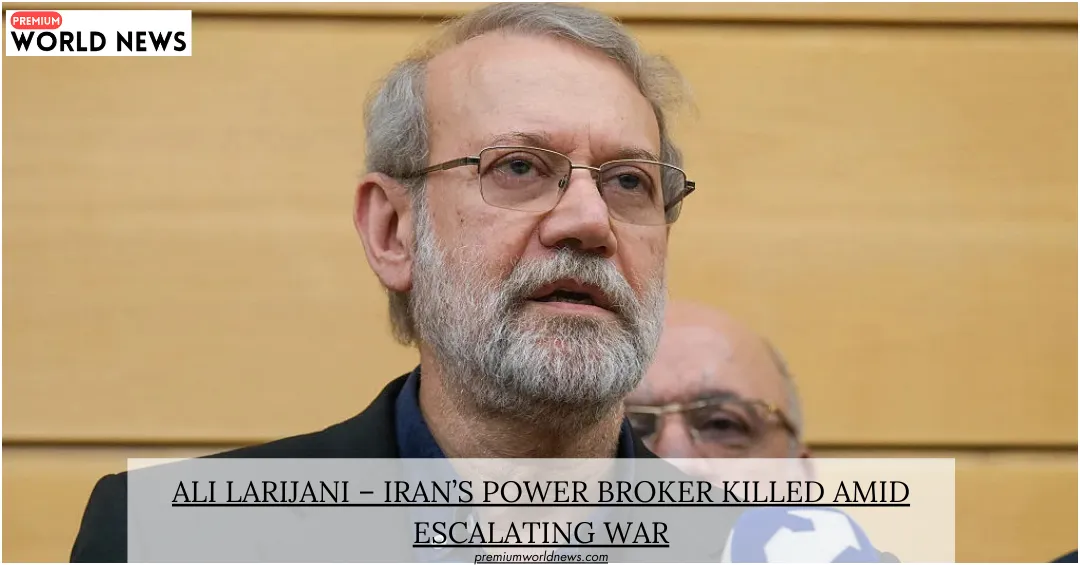
Ali Larijani was one of the most powerful and influential political figures in modern Iran. A senior conservative leader, he served in multiple high-ranking roles, including Speaker of Parliament and Secretary of Iran’s Supreme National Security Council. Known for his deep involvement in Iran’s nuclear negotiations and security strategy, Larijani played a central role in shaping the country’s domestic and foreign policies.
Born in 1958, Larijani was also recognized as an intellectual, having written works on philosophy, particularly inspired by Immanuel Kant. Over the years, he emerged as a key insider within Iran’s ruling system and a trusted ally of the late Supreme Leader Ali Khamenei.
Ali Larijani Killed in 2026 Airstrike
In March 2026, Ali Larijani was killed in a targeted airstrike in Tehran during the ongoing Iran–Israel conflict. Iranian authorities confirmed his death, describing it as a major loss for the nation’s leadership.
Reports indicate that the strike, widely attributed to Israeli forces, also killed members of his family and close aides. His death came shortly after the assassination of Ali Khamenei, further destabilizing Iran’s leadership structure.
Larijani was 67 at the time of his death and was considered a “de facto leader” of Iran during the crisis, managing strategic decisions amid war conditions.
Role in Iran’s Political and Security System
Ali Larijani was more than just a politician—he was a strategic operator who connected Iran’s military, intelligence, and diplomatic arms. He:
- Led nuclear negotiations with Western powers
- Oversaw national security decisions
- Maintained strong ties with Iran’s Revolutionary institutions
- Played a key role in internal governance during crises
His influence grew significantly after the death of Khamenei, positioning him at the center of Iran’s wartime leadership.
Impact of His Death on Iran
Larijani’s assassination marks one of the most significant blows to Iran’s leadership in recent history. Analysts say his death:
- Weakens Iran’s centralized decision-making
- Accelerates internal power struggles
- Signals deep intelligence penetration by adversaries
- Escalates tensions in the Middle East
The killing also coincided with the death of senior commander Gholamreza Soleimani, amplifying the strategic loss for Iran.
Iran’s Response and National Mourning
Following the confirmation of Larijani’s death, Iran entered a period of mourning. Large gatherings were reported in Tehran, with officials praising him as a martyr.
Iranian leaders strongly condemned the attack and vowed retaliation. The government emphasized that such assassinations would not weaken the country’s resolve. According to Iran’s Foreign Ministry, the political system remains “strong and resilient” despite the loss of key figures.
Official & Public Sentiment
From Iran’s perspective, Ali Larijani is being portrayed as:
- A martyr of national resistance
- A symbol of leadership during crisis
- A victim of foreign aggression (U.S.–Israel alliance)
- A defender of Iran’s sovereignty and Islamic system
Iranian officials have framed his killing as part of a broader campaign to destabilize the country. Public rhetoric inside Iran emphasizes unity, resistance, and revenge, with slogans calling for retaliation against Israel.
State narratives highlight that such losses will strengthen national determination rather than weaken it.
Conclusion
Ali Larijani’s death marks a turning point in the 2026 Iran conflict. As a key architect of Iran’s political and security strategy, his loss creates both uncertainty and heightened tensions in the region. While Iran mourns a powerful leader, the geopolitical consequences of his assassination are expected to shape the Middle East for years to come.