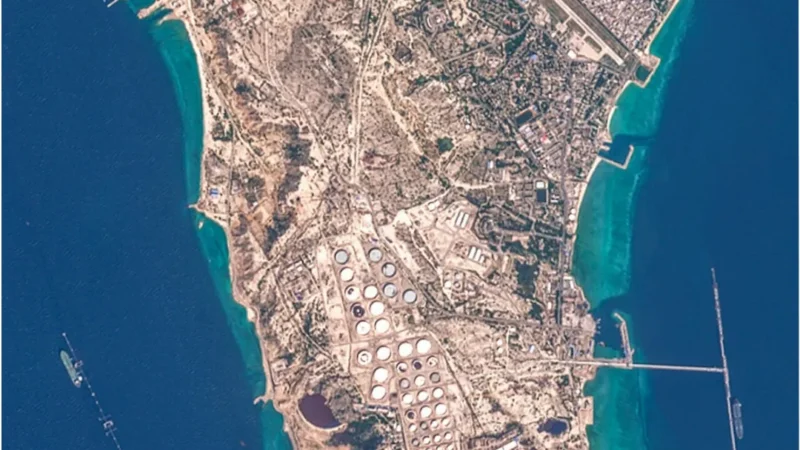



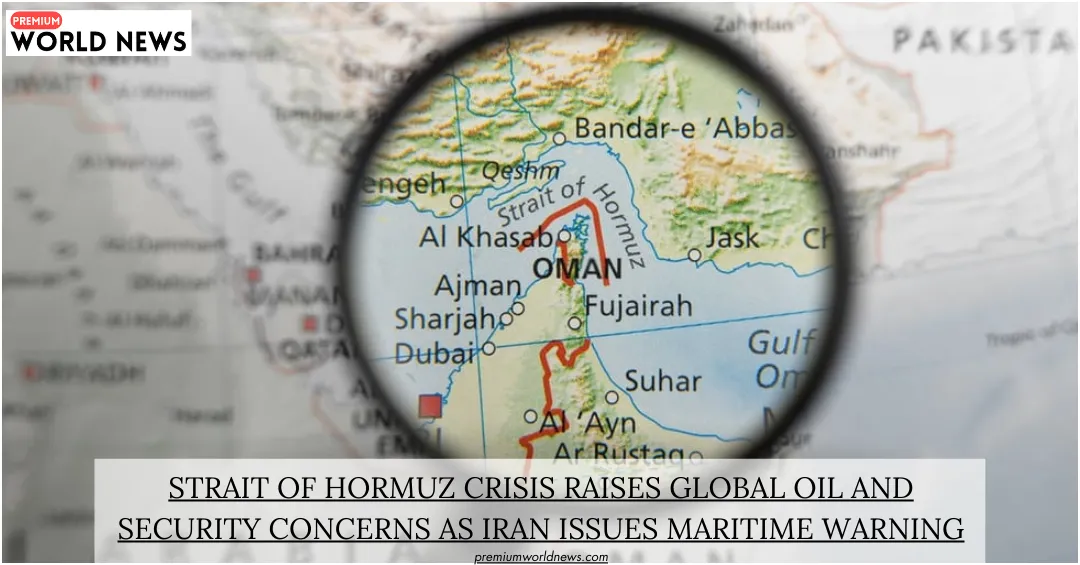
The Strait of Hormuz, one of the world’s most strategically important waterways, has once again become the center of global attention after rising tensions involving Iran, the United States, and regional allies triggered fears of energy disruption and maritime instability.
Recent developments reported by international media indicate escalating risks to global oil supplies, shipping security, and economic stability as Iran’s military signals stricter control over the critical sea passage.
Iran’s Warning to Ships Sparks Alarm
According to Reuters, vessels traveling near the Strait of Hormuz received radio transmissions from Iran’s Revolutionary Guards stating that no ship was allowed to pass through the strait, as confirmed by an official from the European Union naval mission Aspides. The warning comes amid heightened regional tensions following military developments involving Iran and Western allies.
Although Tehran has not formally confirmed a closure, such messages significantly increased anxiety among shipping operators and governments worldwide. The strait connects the Persian Gulf with the Gulf of Oman and serves as the primary export route for oil-producing nations including Saudi Arabia, Iraq, the UAE, and Iran itself.
Security analysts note that even unofficial threats can disrupt maritime trade because shipping companies respond immediately to perceived risks.
Why the Strait of Hormuz Matters to the World
The Strait of Hormuz is widely considered the most important oil chokepoint on Earth. Roughly 20% of global petroleum consumption and a large share of liquefied natural gas shipments pass through this narrow corridor each day.
Any disruption — even temporary — can send shockwaves through energy markets. Analysts warn that reduced shipping flow or increased insurance costs alone can push oil prices higher before actual shortages occur.
Because many Gulf economies depend almost entirely on this single route for exports, the strait represents a critical vulnerability in global energy security.
Oil Markets React to Rising Geopolitical Risks
CNBC reports that escalating tensions involving Iran and potential U.S. military actions could significantly impact global oil markets and economic stability. Experts warn that supply disruptions linked to Iran may trigger higher fuel prices and inflation worldwide, raising fears of broader economic consequences.
Energy analysts emphasize that markets closely monitor the Strait of Hormuz because geopolitical conflict in the region historically leads to immediate price volatility.
Shipping Insurance Costs Surge
Financial Times reporting shows the economic effects are already unfolding. War-risk insurers have begun canceling or repricing policies for ships operating in the Gulf and Strait of Hormuz due to escalating military tensions and fears of retaliation by Iran.
Insurance premiums for vessels have surged sharply, potentially increasing voyage costs by up to 50%. Some shipping companies have already rerouted or delayed voyages to avoid exposure to risk.
Higher shipping costs ultimately translate into increased global energy prices and supply chain expenses.
Iran’s Strategic Importance in the Strait of Hormuz
Iran plays a uniquely powerful role in the Strait of Hormuz for several reasons:
- Geographic Control
Iran occupies the northern coastline of the strait, giving it direct proximity to shipping lanes and significant monitoring capability.
- Military Presence
Iran’s Revolutionary Guard naval forces operate extensively in the region and possess anti-ship missiles, drones, and fast attack vessels capable of disrupting maritime traffic.
- Energy Influence
As a major OPEC oil producer, Iran’s own exports — along with those of neighboring Gulf states — depend on the same route, making the waterway both a strategic asset and economic lifeline.
- Geopolitical Leverage
Threats involving the strait allow Iran to exert pressure during conflicts or sanctions disputes without necessarily closing the passage entirely. Analysts describe Hormuz as a “macro circuit breaker” for global markets because even partial disruption raises prices worldwide.
Global Security Implications
The latest tensions highlight how regional conflicts quickly become global economic risks. Military escalation, shipping warnings, and rising insurance costs demonstrate how fragile international trade routes remain.
Historically, Iran has repeatedly threatened to block the Strait of Hormuz in response to political or military pressure, making the waterway a recurring flashpoint in Middle Eastern geopolitics.
If tensions continue to rise, analysts warn that energy markets, inflation rates, and international trade could face prolonged uncertainty.
Conclusion
The developing situation in the Strait of Hormuz underscores the interconnected nature of geopolitics and global economics. Iran’s strategic location and military influence over the waterway mean that even warnings — not just physical blockades — can reshape oil markets and maritime security overnight.
As diplomatic tensions evolve, the world will continue watching this narrow stretch of water that carries a significant share of global energy supply and holds enormous geopolitical power.