


Fortune has once again placed global economic uncertainty at the center of its financial coverage, as fresh insights from Wall Street, major institutions, and geopolitical developments point toward a fragile outlook for 2026. Drawing from recent reports and expert commentary, the publication underscores a growing divide between recession fears and potential economic resilience.
Wall Street Sees Cracks Beneath the Surface
Recent data highlighted by CNBC shows that recession probabilities are climbing as economic “cracks” begin to appear beneath otherwise stable indicators. Analysts note that while markets have remained relatively strong, underlying weaknesses—particularly in labor markets and consumer demand—are raising alarms among investors.
Echoing this sentiment, coverage referenced by Bloomberg reveals that Wall Street firms are revising growth forecasts downward while increasing the likelihood of a downturn.
Fortune Insights: A “Precarious” Economic Balance
According to Fortune, the economic outlook for 2026 can best be described as “precarious.” The magazine highlights a delicate balance between strong market performance and underlying structural risks, including inflation pressures, geopolitical tensions, and policy uncertainty.
While technological advancements—particularly artificial intelligence—continue to fuel optimism, Fortune warns that overreliance on such growth drivers could expose markets to volatility if expectations are not met.
Larry Fink Warns of Two Extreme Scenarios
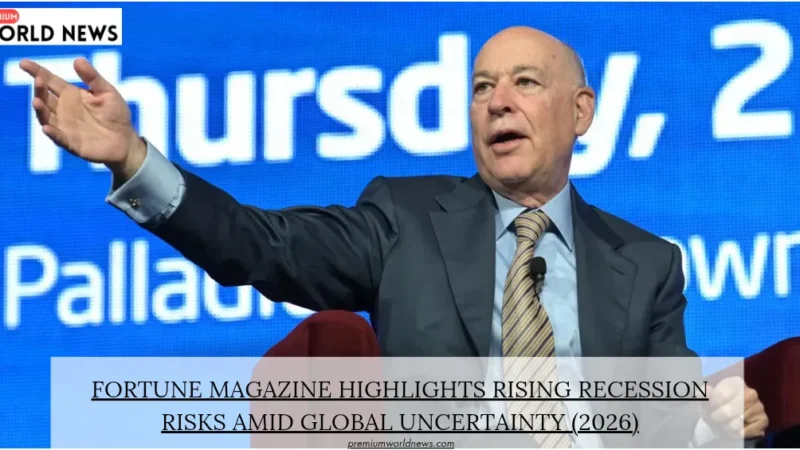
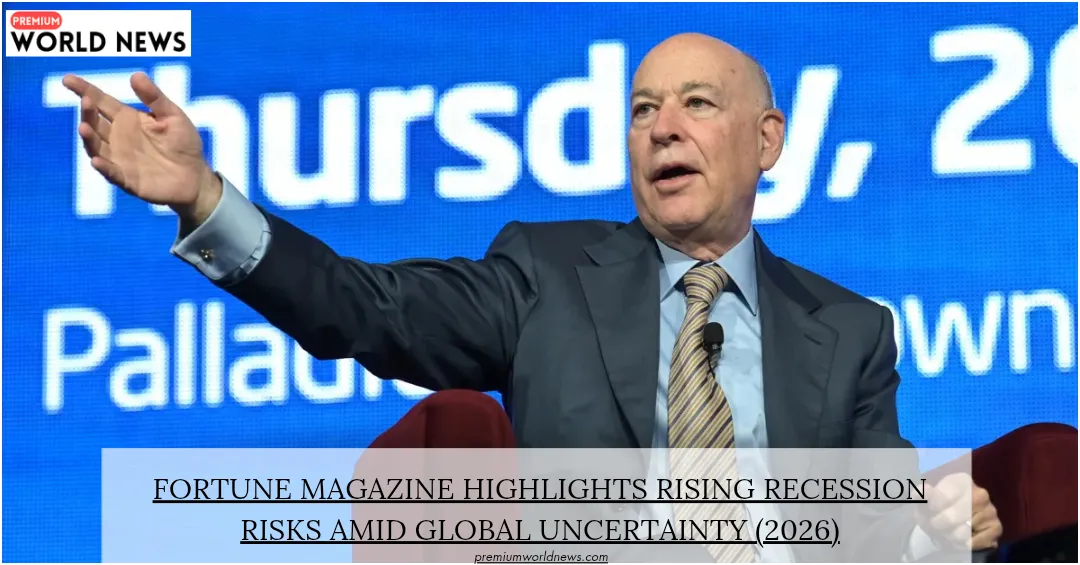
Larry Fink, CEO of BlackRock, has emerged as a key voice in the debate. In insights reported by Fortune, Fink outlined two possible economic extremes:
- A recession triggered by geopolitical shocks and rising oil prices
- Continued growth fueled by resilient markets and technological investment
Fink’s analysis highlights how global conflicts—particularly involving energy markets—could sharply influence inflation and economic stability in the coming months.
Investors May Be Underestimating Geopolitical Risks
Further concerns come from BlackRock President Rob Kapito, who warned that investors may be mispricing the risks associated with geopolitical tensions, including conflicts involving Iran.
Such risks could disrupt global supply chains, push energy prices higher, and accelerate inflation—factors that could tip already fragile economies into recession territory. This aligns with broader warnings that markets may not be fully accounting for worst-case scenarios.
A Divided Outlook for 2026
Despite rising concerns, not all forecasts are pessimistic. Some economists point to continued investment in AI, easing inflation, and potential policy support as reasons the global economy could avoid a full downturn.
However, the consensus reflected in Fortune and other financial outlets suggests a divided outlook:
- Bullish case: Strong innovation, resilient consumers, and policy support drive growth
- Bearish case: Weak labor markets, geopolitical shocks, and inflation trigger recession
Conclusion
Fortune Magazine paints a nuanced picture of the global economy in 2026—one defined by uncertainty, competing narratives, and heightened risk. As recession odds climb and geopolitical tensions intensify, investors and policymakers alike face a challenging environment where outcomes could swing between growth and contraction.