





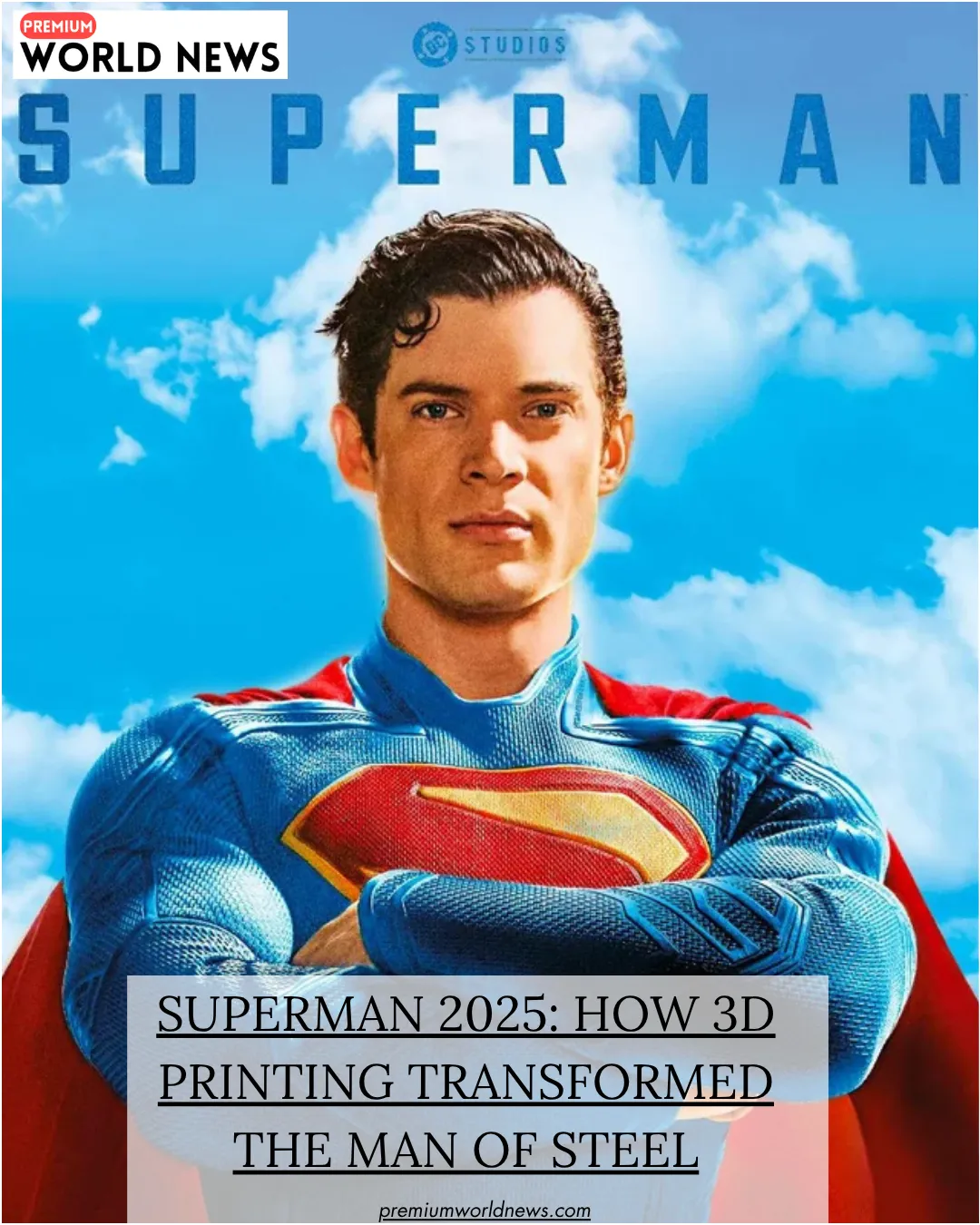
Superman (2025 film) has not only rebooted the iconic superhero for a new generation but also revolutionized filmmaking technology. Behind the scenes, cutting-edge 3D printing techniques played a major role in bringing realism, speed, and innovation to the production.
A New Era of Superhero Filmmaking
Directed by James Gunn, Superman (2025) marks the beginning of a new DC Universe chapter. The film stars David Corenswet as Superman alongside Rachel Brosnahan as Lois Lane. It became a major box-office success, earning over $600 million worldwide and receiving positive reviews for its fresh tone and storytelling.
But beyond the story and performances, the film stands out for its groundbreaking use of practical effects powered by 3D printing.
How 3D Printing Changed Production
The visual effects studio Legacy Effects introduced advanced 3D printing systems during production, transforming how props, costumes, and animatronics were created.
Traditionally, filmmakers had to choose between speed and quality—fast prototypes lacked detail, while high-quality parts took longer and cost more. With modern 3D printing, that limitation was significantly reduced.
- High-speed printers delivered camera-ready parts
- Reduced reliance on expensive manufacturing methods
- Faster design iterations directly from digital files
This allowed the team to move from concept to final product in hours instead of days.
Iconic Props Built with 3D Printing
Several standout elements in Superman (2025) were made using this technology:
Mr. Terrific’s Flying Chair
A complex mechanical prop, the chair required flexibility, strength, and realism. Engineers used mostly 3D-printed components combined with metal parts, then finished them with sanding and painting for a polished, cinematic look.
Fortress of Solitude Robots
Animatronic robots, including one named “Gary,” were built with printed joints and brackets instead of heavy metal. This made them:
- Lighter
- Easier to assemble
- More adaptable during filming
The team could produce multiple versions of a single part in one day, dramatically speeding up production.
Materials That Made the Difference
Different materials were used depending on the need:
- PLA – for quick prototypes and smooth surfaces
- TPU – for flexible costume parts
- PA-CF (carbon fiber nylon) – for durable mechanical components
This smart material selection ensured both performance and realism on screen.
Blending Practical Effects with CGI
Despite the rise of CGI, practical effects remain essential for realism. Physical props provide:
- Authentic texture
- Natural lighting interaction
- Real weight for actors
3D printing helped bridge the gap between traditional craftsmanship and digital filmmaking, allowing both worlds to work seamlessly together.
Why It Matters for Hollywood
Superman (2025) proves that 3D printing is no longer just a prototyping tool—it is now a core production technology.
Key industry impacts include:
- Faster production timelines
- Lower costs
- Greater creative flexibility
- Improved on-set realism
This approach is expected to influence future blockbuster films and reshape how visual effects are created.
Conclusion
Superman (2025) isn’t just a superhero reboot—it’s a technological milestone. By integrating advanced 3D printing into filmmaking, the production team has set a new standard for efficiency and realism in Hollywood.
As studios continue to adopt these innovations, the future of cinema will likely combine digital precision with physical artistry—just like the Man of Steel himself.
Instagram Tags