





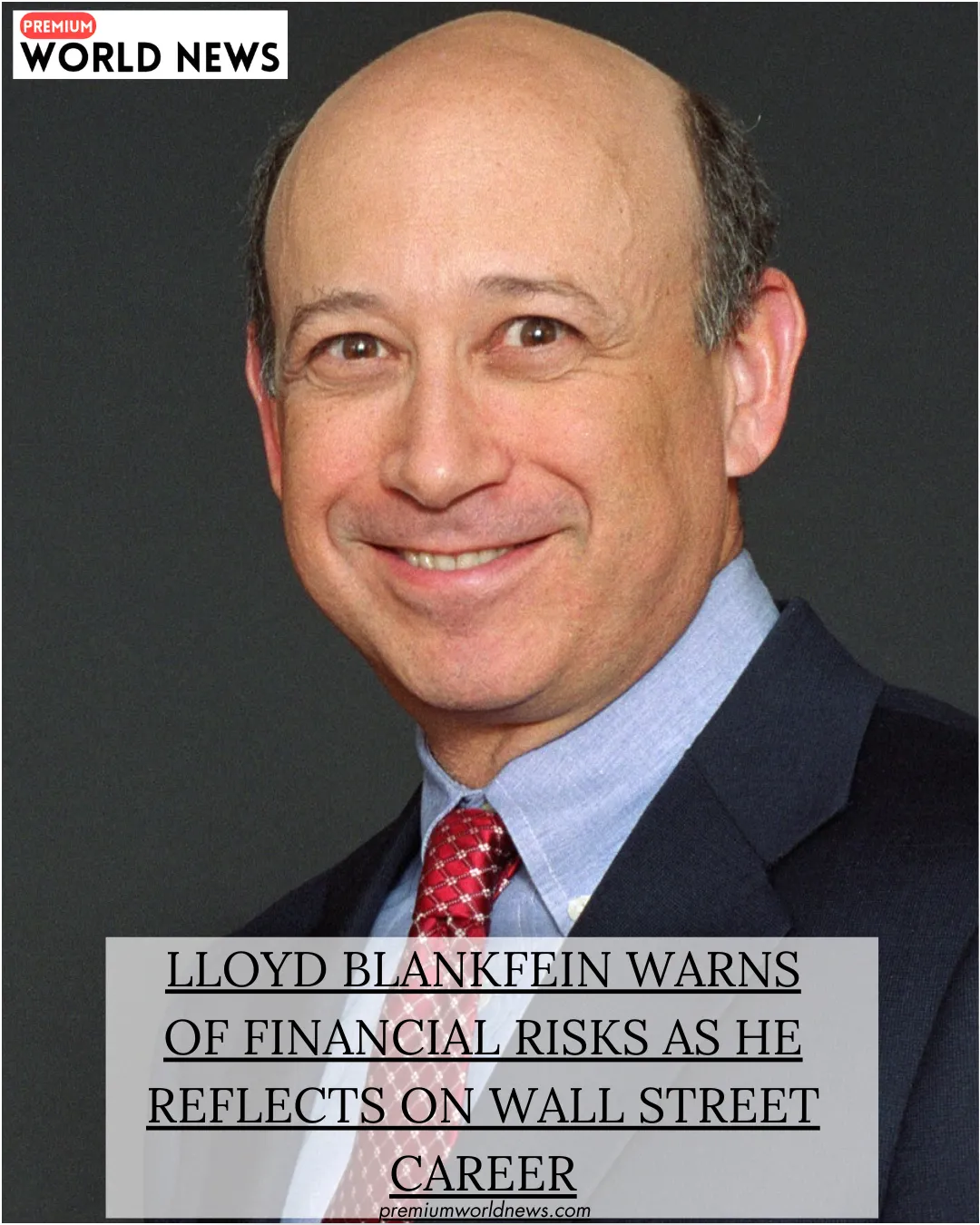
Former Goldman Sachs chief Lloyd Blankfein is once again in the spotlight as he discusses his new memoir and raises concerns about potential risks in global financial markets. The veteran investment banker, who led Goldman Sachs through one of the most turbulent periods in modern finance, is sharing insights about leadership, economic uncertainty, and lessons learned from the 2008 Financial Crisis.
From Brooklyn Roots to Wall Street Leadership
Blankfein’s story is one of unlikely success. Born in New York City in 1954, he grew up in public housing in Brooklyn before attending Harvard University for both undergraduate studies and law school.
After briefly working as a lawyer, he joined a commodities trading firm that had been acquired by Goldman Sachs in 1982. Over the years, Blankfein climbed the ranks at the bank, eventually becoming president and chief operating officer before taking over as chairman and CEO in 2006.
His leadership coincided with the global financial meltdown in 2008, when many financial institutions collapsed or required government assistance. Goldman Sachs managed to survive the crisis, although the bank and its leadership faced intense scrutiny from regulators and the public.
New Memoir “Streetwise” Shares Lessons from Wall Street
Blankfein’s newly released memoir, Streetwise: Getting to and Through Goldman Sachs, offers a candid look at his rise from modest beginnings to the pinnacle of the financial world. The book recounts his experiences navigating corporate culture, managing crises, and leading one of the world’s most powerful investment banks.
In interviews promoting the book, Blankfein says his goal is to demystify Wall Street and show that career success often comes from persistence, timing, and resilience rather than extraordinary genius.
The memoir also reflects on the challenges Goldman Sachs faced during the financial crisis, including regulatory pressure and public criticism. Blankfein argues that strong risk management and constant scrutiny of asset valuations helped the firm navigate the turmoil more effectively than some rivals.
Warning Signs in Today’s Financial Markets
Beyond recounting past events, Blankfein is also raising alarms about potential vulnerabilities in today’s financial system. He recently warned that parts of the rapidly expanding private credit market could pose risks similar to those that triggered earlier crises.
According to Blankfein, investors may be underestimating the dangers of illiquid assets and opaque lending structures. If market conditions change suddenly, some assets currently valued highly might not hold those prices in reality, potentially leading to significant losses across the financial system.
He stresses that market participants should remain cautious and avoid complacency after more than a decade of relative financial stability following the 2008 crisis.
A Voice Still Influential in Finance
Although Blankfein stepped down as Goldman Sachs CEO in 2018, his views continue to carry weight across global finance. Through speaking engagements, interviews, and now his memoir, he reflects on leadership, market cycles, and the pressures of running one of the world’s most influential banks.
His message is clear: even after decades in finance, the biggest lesson may be that markets are unpredictable—and vigilance remains essential.